Woolwich
The Unlikely Pilgrimage of Harold FryWoolwich is the place where Harold Fry's married life began, the setting of a dance that he and Maureen recall differently during his long walk. It is a memory of origin, a fixed point against which the vast, uncertain geography of Harold's pilgrimage is measured. The district exists in the novel less as a physical place than as a remembered moment, one that carries the weight of a courtship, a marriage, and the decades of silence that followed. When Maureen brings it up in a telephone call, it becomes a fragile bridge between two people who have spent twenty years sleeping apart.
The Dance in Woolwich
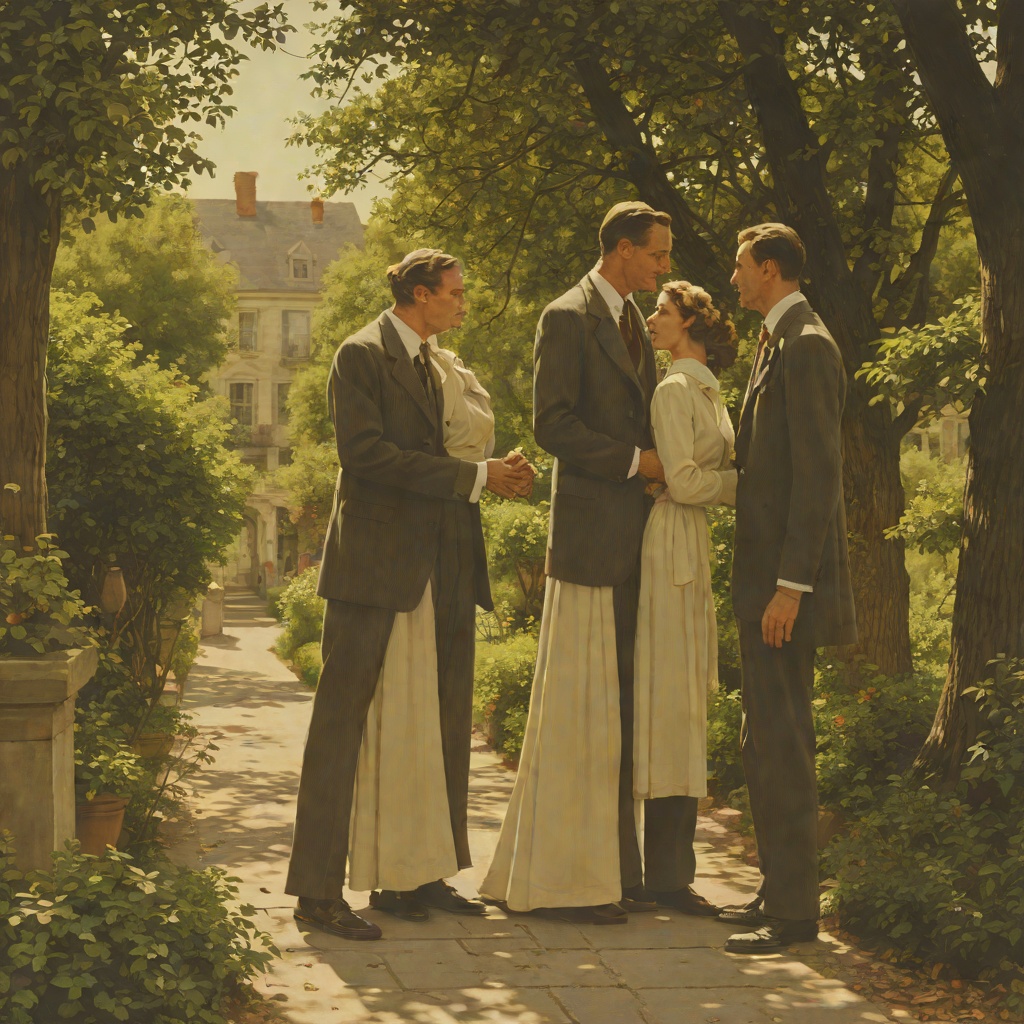
The single concrete event associated with Woolwich is a dance at which Harold and Maureen first met. Maureen, speaking to Harold on the phone during his pilgrimage, reminds him of the occasion: "It was at a dance in Woolwich. You touched my neck. Then you said something funny. We laughed and laughed." Her recollection is specific and tender, anchored in a gesture and a shared joke. Harold, however, struggles to picture it. He recalls a dance, and he remembers how beautiful she had been, and how delicate, with her dark, long hair falling like velvet either side of her face. He remembers dancing like an idiot. But it seems unlikely to him that he had been bold enough to walk across a crowded room and claim her, or that he had made her laugh and laugh. He wonders, privately, if she is mistaking him for someone else. The discrepancy between their memories is telling: Maureen holds onto the romance of their beginning, while Harold, burdened by guilt and self-doubt, cannot believe he was ever capable of such confidence.
A Memory Against the Walk
Woolwich functions as a counterpoint to the physical ordeal of Harold's journey. As he walks, his body becomes the site of pain and memory. He inspects his feet in a hotel room, noting the tender toes and the possible blister, quietly proud of his condition. Later, on the hard stretch along the A396 to Tiverton, his calf fizzes with pain and he berates himself for managing so few miles. The memory of the dance, by contrast, is weightless, a moment of effortless connection. Yet it does not come to him easily. It is Maureen who offers it to him, and his inability to fully claim it reflects the deeper estrangement between them. The dance in Woolwich is a memory of a time before the loss of their son David, before the years of silence, before Harold's retreat into the spare room. It is a reminder of what they once were, and a measure of what they have become.
The Geography of the Journey
Woolwich also stands in implicit contrast to the landscape of Harold's pilgrimage. His walk takes him through the open land of South Hams, the fury of Exeter, the Cotswold stone that becomes the red brick of Warwickshire, and finally to the sea at Berwick-upon-Tweed. He measures his journey not in miles but in remembering, and the places he passes become steps in his journey. Woolwich, as the site of his first meeting with Maureen, is one of the fixed points of his inner geography, even if he cannot fully inhabit the memory. It is part of the past that he has spent twenty years seeking to avoid, and that the walk now unleashes. The city, like the dance, is a place he cannot easily return to in his mind, even as he moves physically toward the other end of England.
The Significance of the Recollection
Maureen's phone call about the dance is a turning point in their relationship. She tells him she has moved out of the spare room and returned to the main bedroom, a quiet but significant gesture. Then she offers him the memory of Woolwich. Harold's response is hesitant, but the memory itself becomes a kind of offering, a way of reaching across the distance that the walk has created. The dance in Woolwich is the origin of their story, and in recalling it, Maureen begins the work of reclaiming their shared past. For Harold, the memory is both a comfort and a challenge, a reminder of a self he no longer recognizes. The district thus carries a double significance: it is the place where their marriage began, and it is the memory that helps them begin again.